IN/HIBITED
This page brings together works through concepts that recur across the practice.
Spanning different periods, materials, and forms, they are connected not by chronology or by established bodies of work, but by the questions, structures, and ideas they articulate. Some stand apart from established bodies of work. Others contain, in concentrated form, concerns that unfold across multiple projects.
Neither preliminary nor peripheral. These are works through which concepts emerge, take form, and become visible within the practice.
2026
📍BULLETIN
OPEN STUDIO DAYS
Participating in Malmö Open Studios on 5 September and Limhamn Culture Trail (Kulturvandringar) on 12 September, 12–17.
OPEN TO EVERYONE • See a snippet here
A: Limhamnsvägen 111–113, 216 48 Limhamn - Sweden
T: +45 3132 2155
E: contact@camillahowalt.net
CONCEPT OF BLUEPRINT
2021
WE ARE TIME to be human
RELATED
→ THE ARCHITECT’S PARAdice - unpublished (2024)
Written in parallel with my visual practice, this novel explores attention, ambiguity, and the forms through which a human being becomes present to themselves and others. Rather than offering answers, it remains with questions of perception, relation, and the experience of being in time.
Further information and excerpts can be found on the dedicated project page or press the image:

CONCEPT OF COLLAGE
2012–2015
(co)ORDINATED COPYRIGHTS
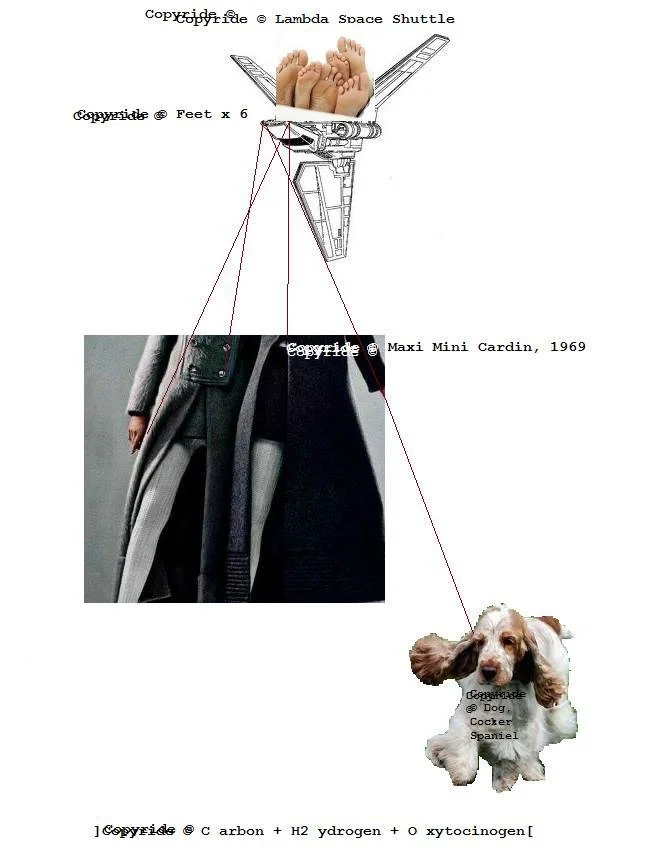
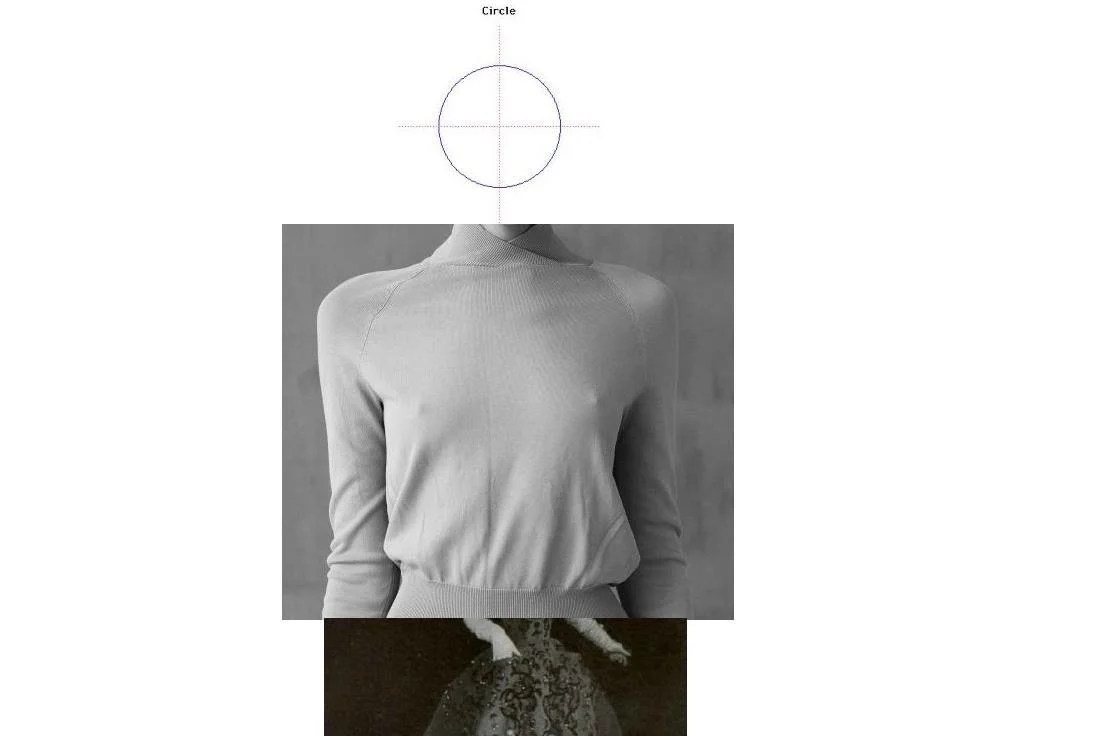
This series operate as a sustained investigation into ownership, authorship, and the construction of subjectivity through borrowed forms. The title itself performs a double movement. "Copyright" invokes legal protection, originality, and claims of possession; "coordinated" invokes geometry, mapping, and systems of relation. Together they suggest that identity is never singular but assembled through coordinates – historical, cultural, and symbolic.
Across the series, images are arranged along a persistent vertical axis. Geometric diagrams occupy the upper register, garments and bodies the centre, while chemical or textual formulations appear below. The works read less as collages than as propositions: systems through which bodies become legible and culture organises itself.
Further information and excerpts can be found on the dedicated project page or press the images:
CONCEPT OF SUPERIMPOSITION
2002-2009
YEARS
This period unfolded largely outside exhibition structures. While large-scale installation work receded, artistic inquiry continued through drawings, notebooks, ink works on paper, and material experiments developed alongside everyday life and the raising of children.
These years brought a fundamental shift in the experience of time, labour, repetition, and attention. Rather than constituting a break in the practice, they altered its conditions. Many works from this period remain dispersed, archived, or are only now being rediscovered and added to LAB WORK.
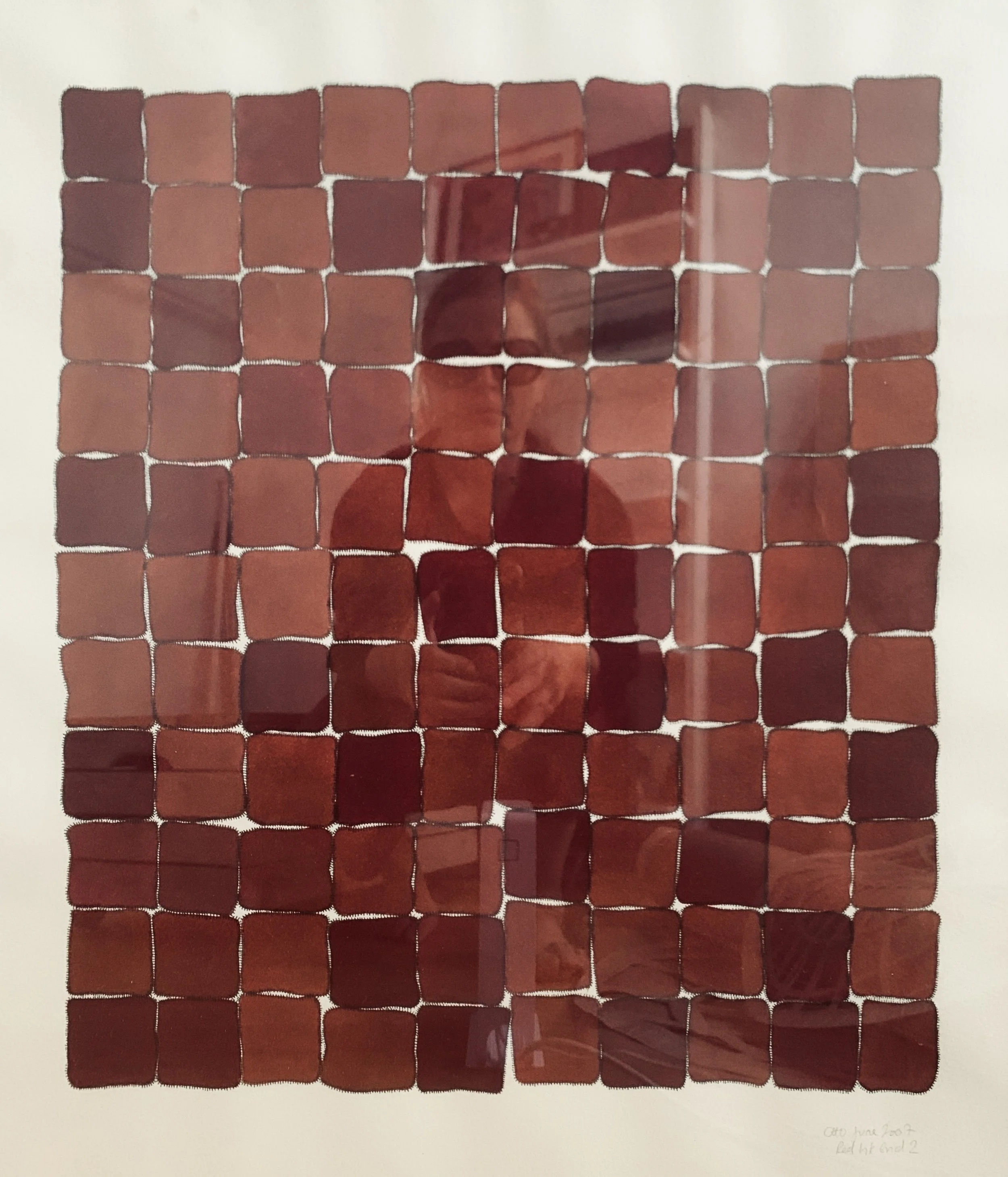
The raising of children was itself a profound creative undertaking, reshaping both life and the circumstances under which art could be made. Artistic thinking persisted in smaller and more intimate formats, where questions of emotional space, structure, materiality, and relation continued to evolve.
From around 2007 onwards, the first felt grids began to emerge, introducing a language of seriality, accumulation, and textile structure that would become central to later work.
LAB WORK gathers these studies, fragments, and transitional works as part of a continuous artistic trajectory in which finished works and preliminary investigations coexist.
©️ Camilla Howalt
CONCEPT OF INTIMACY
2001
NESTED WEIGHT 3/3
Limited Edition 𝑺𝒆𝒓𝒊𝒂𝒍 𝑺𝒄𝒖𝒍𝒑𝒕𝒖𝒓𝒆
Three hand-polished bronze spheres, in a diameter of 40 mm, each stamped with serial numbers and initials, tightly wrapped in lengths of fine, translucent fishing thread (70–100 denier). At first glance, they appear delicate - like small nests or cocoons, barely there. But when held, their unexpected weight interrupts the illusion.
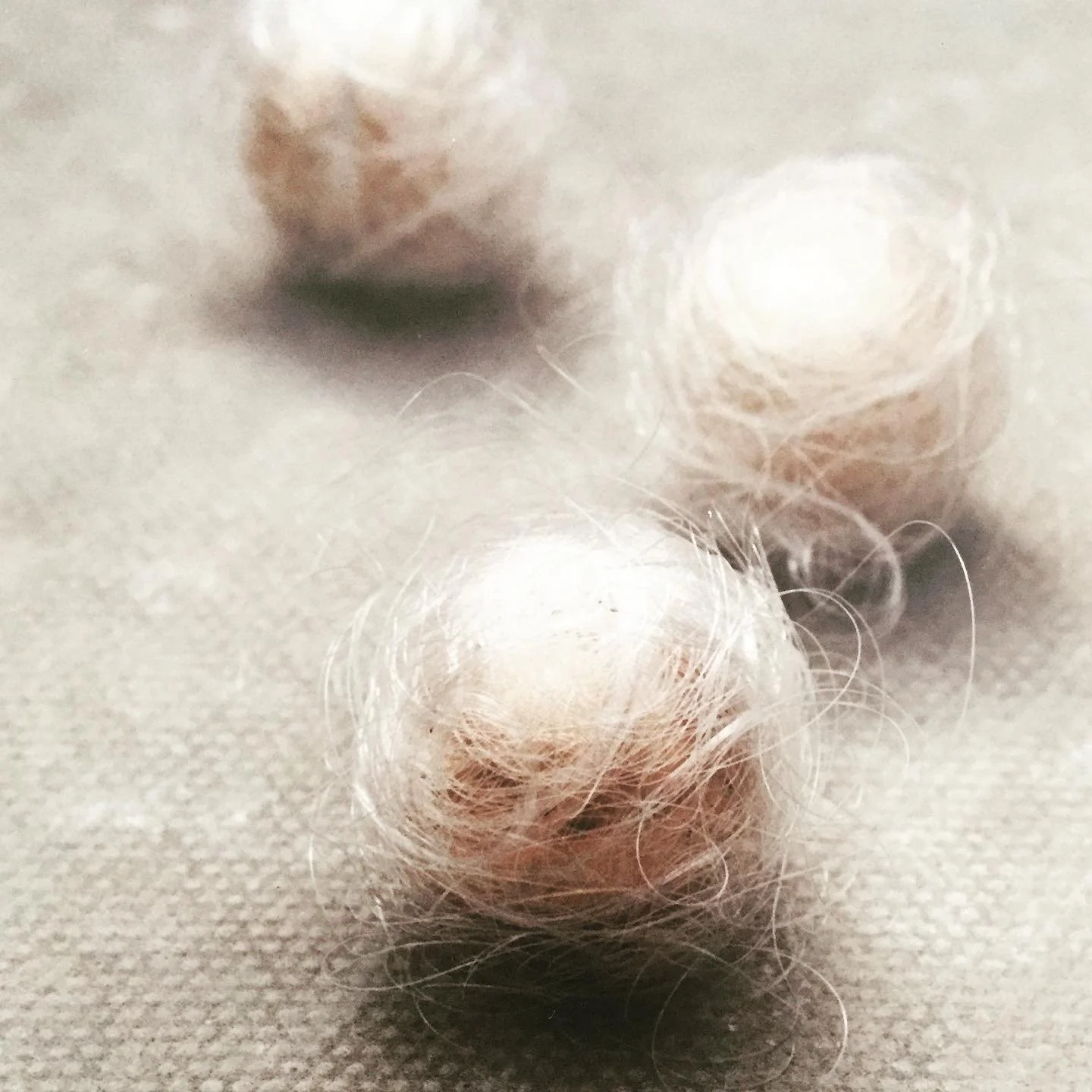
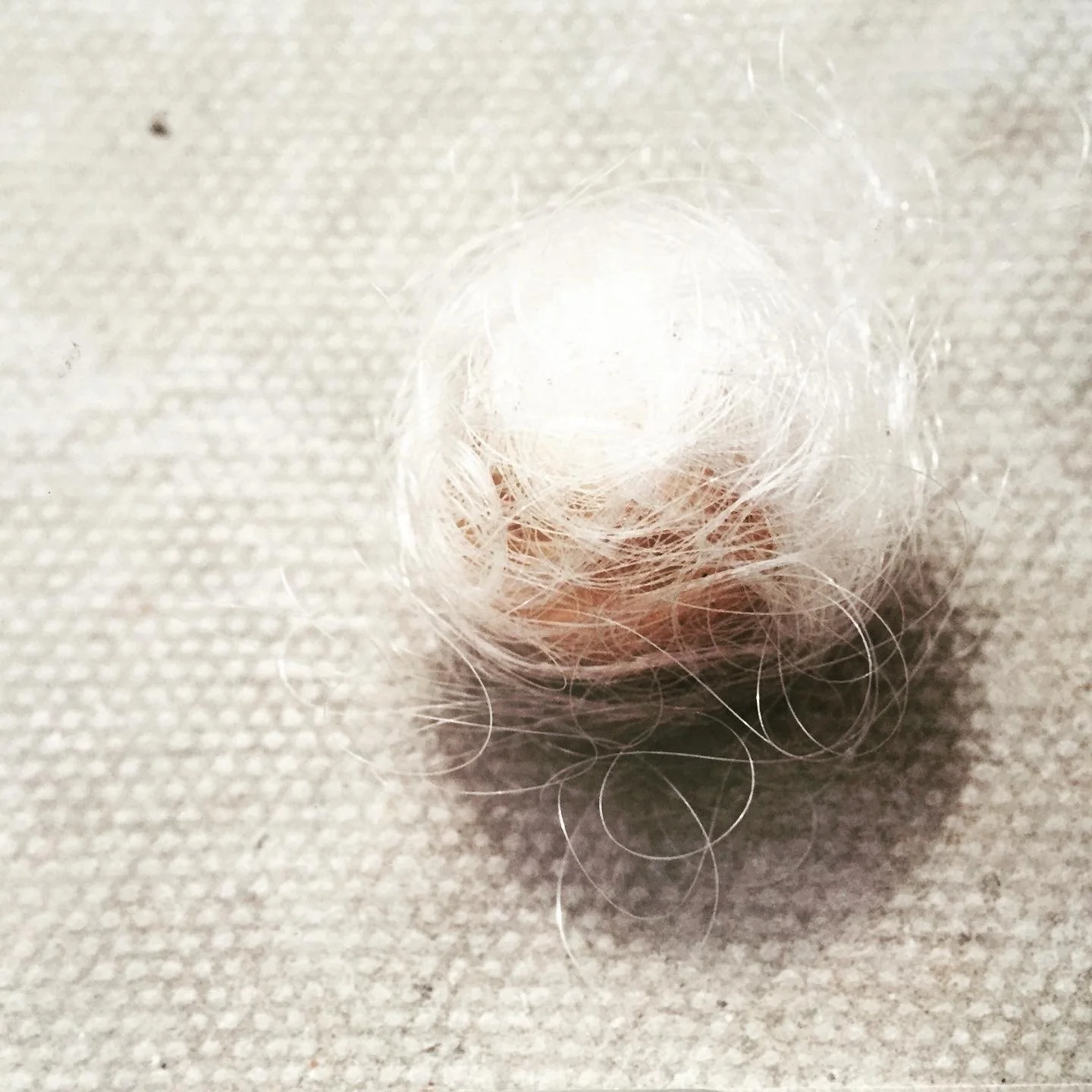
Made to be touched, not just seen, these intimate sculptures stage a quiet conflict between perception and sensation. What seems soft is dense. What looks fragile is solid. The thread does not cradle but cocoons - an act of containment as much as concealment. Beneath the apparent chaos of the thread’s layers lies a hidden structure, revealing an underlying order in what might first appear tangled or disorderly.
Each sphere is held in different private collections in England.
©️ Camilla Howalt